The SABRENT USB 3.0 Universal Docking Station review is for laptop and tablet users weighing a single hub for display connections, wired networking, USB peripherals, and charging.
Its mix of HDMI and DVI outputs, Gigabit Ethernet, and several USB ports suits a desk setup, though display support deserves particular attention for Mac users.
Sabrent Universal Dock Review Summary
The quick verdict
1,000+ ratings
Read Amazon ReviewsSabrent USB 3.0 Universal Docking Station DS-RICA
A fit for laptop and tablet users who want wired networking, two display connections, extra USB ports, and dedicated device charging from one dock.
- HDMI and DVI outputs support simultaneous displays.
- Two USB 3.0 ports support transfer speeds up to 5Gbps.
- Two USB 2.0 ports support speeds up to 480Mbps; USB 1.1 speeds are listed up to 12Mbps.
- A 10/100/1000 Gigabit Ethernet port provides wired network connectivity.

Pros
- Combines two display outputs with wired networking in one desktop dock.
- Includes both USB 3.0 and USB 2.0 ports for connecting peripherals.
Consider before buying
- Display compatibility requires checking the host computer, operating system, DisplayLink driver, and monitor connections before buying.
- The product information flags a DisplayLink display problem after updating to macOS 10.13.4, so Mac users need to verify their specific setup.
Read the full review summary
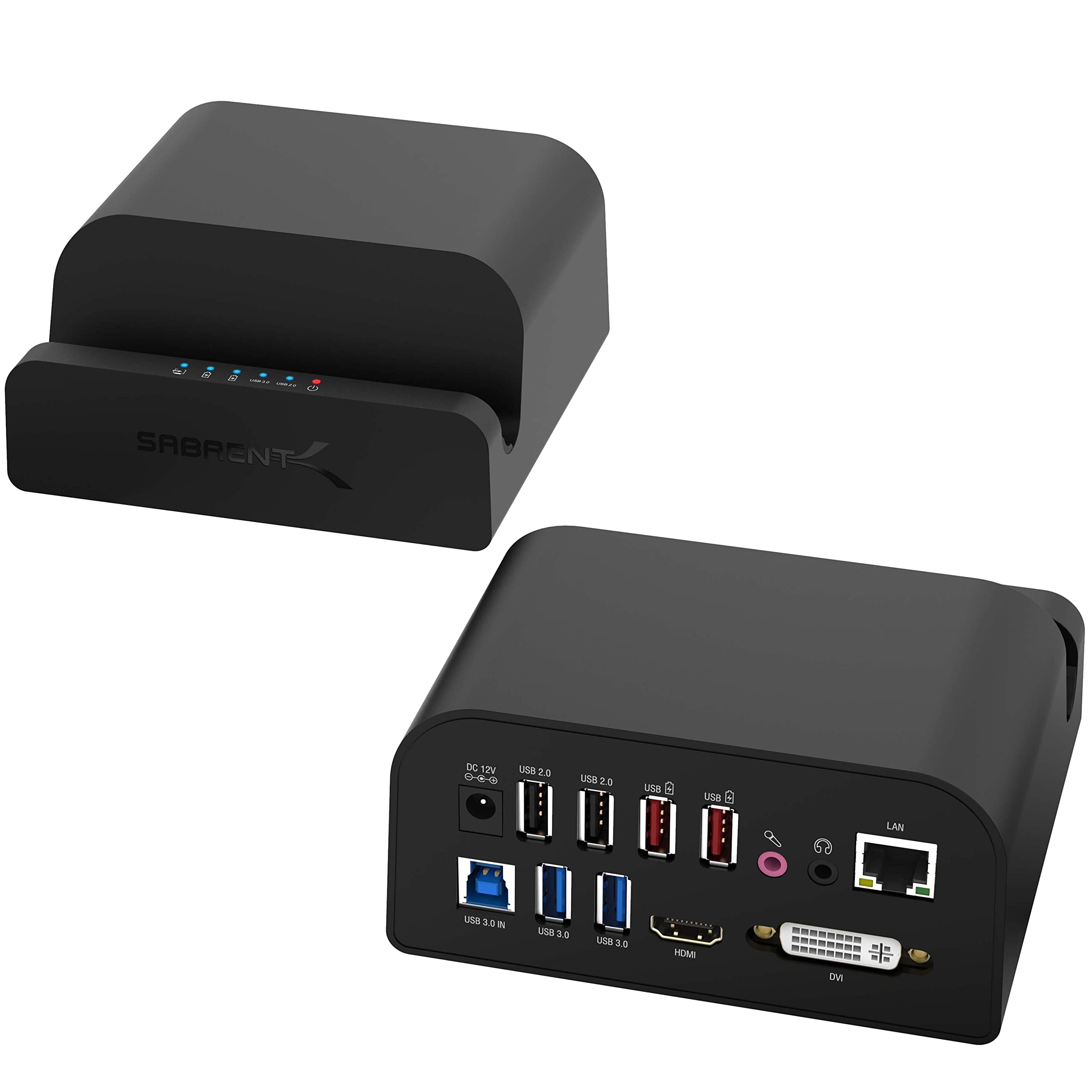
The Sabrent USB 3.0 Universal Dock DS-RICA brings together dual display outputs, a speaker port, a microphone jack, wired Gigabit Ethernet, and four USB data ports.
Two additional 2.4A charging ports give it a separate role for powering devices, making the dock useful for a workspace with several kinds of connections to manage.
Its appeal depends on matching its connections to your computer and monitors.
Before choosing it, check which display inputs your monitors use, whether your computer's operating system and DisplayLink driver support the display setup you want, and whether the dock's USB charging ports fit your devices.
Mac users should be especially careful because the product information describes a display issue with macOS 10.13.4.
The buying factors
Sabrent Universal Dock Scorecard
Editorial scores reflect listed features and buyer fit; they are not laboratory measurements or customer ratings.
Display connectivity
HDMI and DVI support simultaneous displays, though the right setup depends on compatible computer, driver, and monitor connections.
Wired networking
The Gigabit Ethernet port adds a clear wired-network option at a desk.
USB expansion
Two USB 3.0 and two USB 2.0 ports cover a useful mix of peripherals and transfers.
Device charging
Two dedicated 2.4A charging ports add flexibility alongside the data ports.
Audio connections
Speaker and microphone ports support a simple wired audio setup.
Operating-system fit
The macOS 10.13.4 DisplayLink issue makes version and driver compatibility an important purchase check.
Key Features and Specifications of Sabrent Universal Dock
- HDMI and DVI outputs support simultaneous displays.
- Two USB 3.0 ports support transfer speeds up to 5Gbps.
- Two USB 2.0 ports support speeds up to 480Mbps; USB 1.1 speeds are listed up to 12Mbps.
- A 10/100/1000 Gigabit Ethernet port provides wired network connectivity.
- Two 2.4A charging ports are provided for charging devices.
- Speaker and microphone jacks support wired audio connections.
Pros and Cons of Sabrent Universal Dock
Pros
- Combines two display outputs with wired networking in one desktop dock.
- Includes both USB 3.0 and USB 2.0 ports for connecting peripherals.
- Dedicated charging ports preserve the distinction between charging and data connections.
- Speaker and microphone ports can simplify a desk setup with wired audio equipment.
Consider before buying
- Display compatibility requires checking the host computer, operating system, DisplayLink driver, and monitor connections before buying.
- The product information flags a DisplayLink display problem after updating to macOS 10.13.4, so Mac users need to verify their specific setup.
- The mix of HDMI and DVI may not match every monitor setup; confirm the inputs you need before choosing the dock.
Who Should Buy Sabrent Universal Dock?
Good fit
Consider the Sabrent Universal Dock if your desk setup needs wired Gigabit Ethernet, simultaneous HDMI and DVI display connections, several USB ports, and separate charging ports.
The mix is particularly useful when those connections would otherwise require separate adapters or when you want peripherals and wired audio gathered at the desk.
It may suit a laptop or tablet workflow where displays and peripherals stay in one place. Check the computer's operating-system version and DisplayLink support, then confirm the monitor inputs and the charging needs of your devices.
Those checks matter more here than simply counting ports: the display setup relies on compatibility, while the two 2.4A ports are specifically described as charging ports.
For a buyer whose equipment matches the connections, the dock offers a practical selection of desk-oriented ports.
Its usefulness is less clear if your display arrangement is not compatible or if your main priority is a different type of docking connection.
Who should skip it
Skip it if your purchase depends on using DisplayLink displays with macOS 10.13.4 and you cannot confirm that your intended setup works with the available driver support.
Look elsewhere if your monitors do not have suitable HDMI or DVI inputs and you do not already have a workable connection plan. Check compatibility first rather than assuming the dock will adapt to every display setup.
Sabrent Universal Dock: What Its Connections Mean for Your Desk
Two display outputs, with compatibility to check
HDMI and DVI give the dock two different display connection types and support simultaneous displays.
That can be helpful when building a multi-monitor desk, but the output labels alone do not establish that every computer and display combination will work.
Confirm the host computer's DisplayLink driver support and the monitor inputs you plan to use before relying on a particular arrangement.
USB ports split data and charging roles
The dock has two USB 3.0 ports rated for up to 5Gbps and two USB 2.0 ports rated for up to 480Mbps, with USB 1.1 listed at up to 12Mbps.
The different ratings make port choice relevant: use the USB 3.0 connections for peripherals where higher transfer speeds matter, and treat the two 2.4A ports as the described charging connections.
Check your device's charging requirements to decide whether those ports fit your routine.
Gigabit Ethernet and wired audio at the desk
A 10/100/1000 Gigabit Ethernet port gives the dock a wired networking option, which can be useful when a desk is already set up near a network connection. The speaker and microphone jacks also cover basic wired audio.
Together, these ports make the dock more than a display adapter, especially for a workspace that keeps a computer connected to networking and audio equipment.
Mac owners should check the stated driver caveat
The product information identifies a specific DisplayLink problem following the macOS 10.13.4 update: connected displays may go blank. It also says an available beta driver could extend one desktop and that Ethernet and audio were unaffected.
Because that note concerns a particular older macOS version and driver, buyers should verify compatibility for their current computer and intended display setup rather than assume the caveat applies unchanged to every configuration.
Alternatives to Sabrent Universal Dock
Laptop Docking Stations alternative
1,000+ ratings
Read Amazon ReviewsSabrent 6-Port USB-C Dock for Steam Deck and ROG Ally DS-SD6P
Choose the DS-RICA if its HDMI and DVI display arrangement, wired Ethernet, audio jacks, and separate charging ports match your desk.
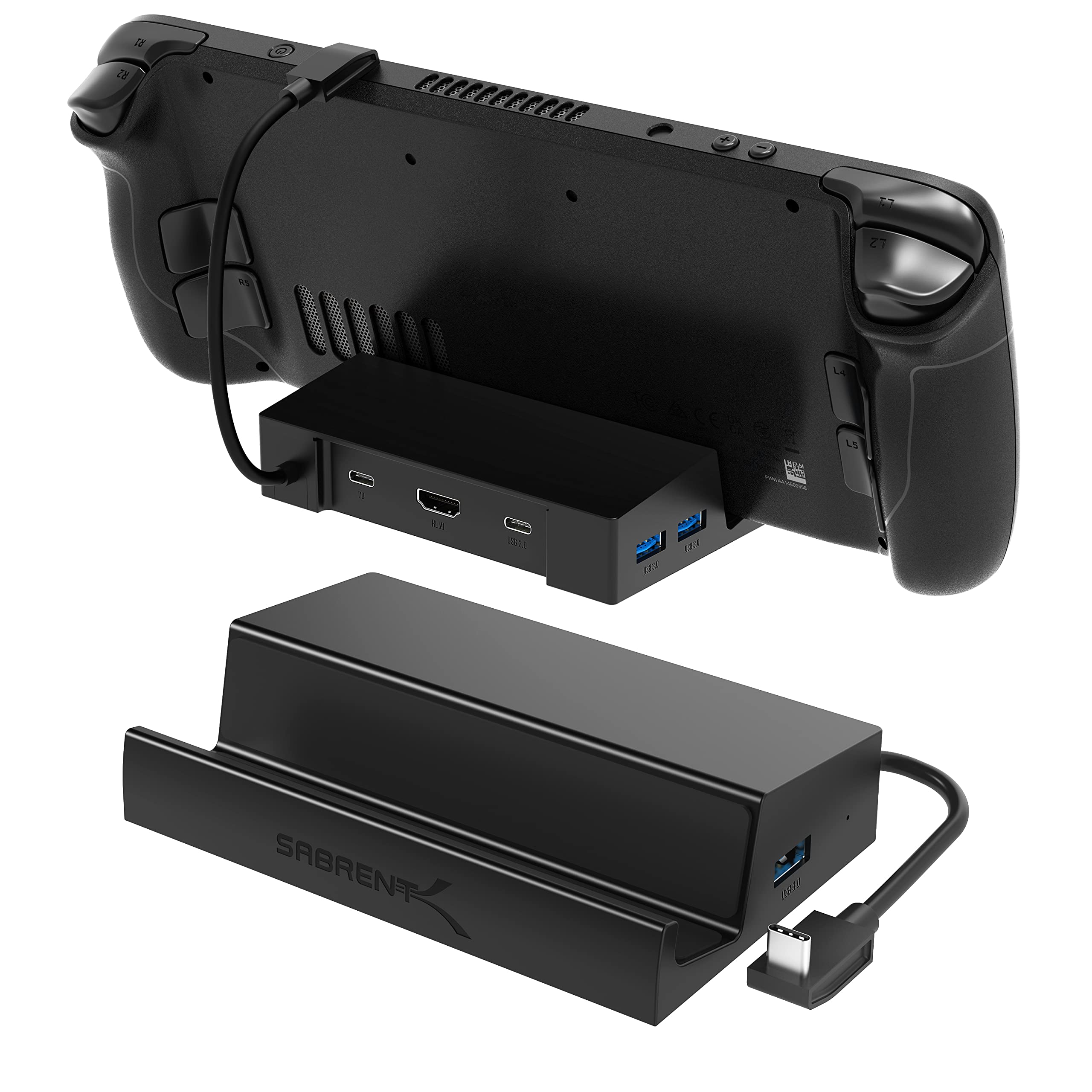
Consider the DS-SD6P for a compatible USB-C handheld or laptop setup where compact travel, USB-C power delivery, and 4K HDMI matter more than Ethernet or DVI.
- The DS-SD6P is a compact USB-C dock with HDMI 2.0 output up to 4K at 60Hz on compatible DisplayPort Alt Mode devices, three USB-A 5Gbps ports, one USB-C data port, and up to 95W PD3.0 charging.
- It does not include Ethernet.
- The DS-RICA focuses on HDMI and DVI displays, Gigabit Ethernet, USB 3.0 and 2.0 data ports, and two 2.4A charging ports.
Laptop Docking Stations alternative
60+ ratings
Read Amazon ReviewsSabrent Thunderbolt 4 Docking Station DS-T4MF
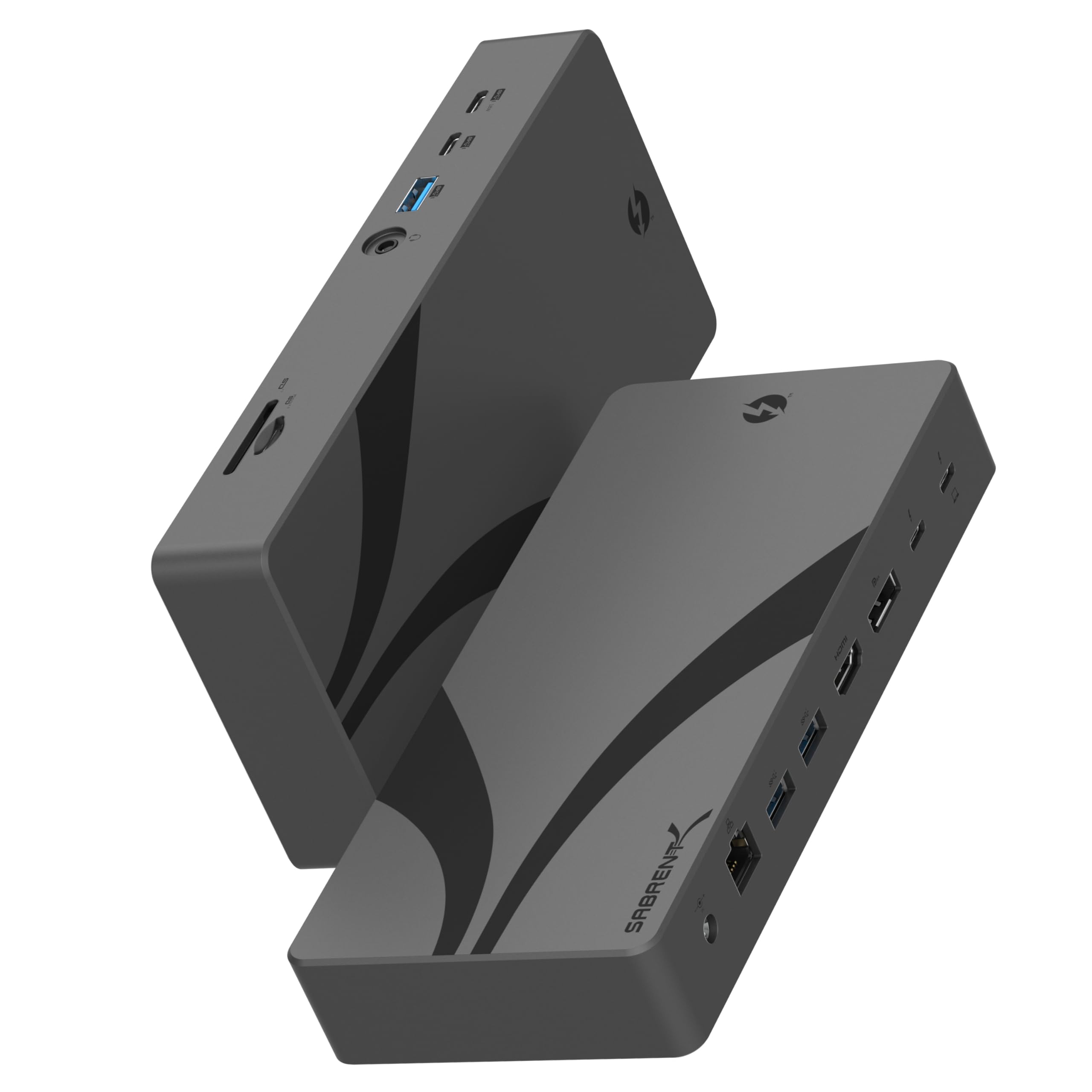
Consider the DS-T4MF if your computer supports Thunderbolt 4 or compatible USB4 connections and you need its broader display, card-reader, and high-speed data options.
The DS-RICA may be a closer fit when HDMI and DVI, basic USB expansion, audio jacks, and charging ports are the connections you need.
- The DS-T4MF is a Thunderbolt 4 dock with up to 40Gbps transfer speeds, HDMI 2.1 and DisplayPort 1.4 outputs, multiple Thunderbolt ports, USB-C and USB-A ports, Gigabit Ethernet, audio, and SD and microSD card readers.
- Its display options include up to 8K output, with specific modes depending on connection and setup.
- The DS-RICA provides HDMI and DVI outputs, Gigabit Ethernet, USB 3.0 and 2.0 ports, audio jacks, and two 2.4A charging ports.
Is Sabrent Universal Dock Worth It?
The Sabrent USB 3.0 Universal Dock DS-RICA is worth considering for a desk setup that can use its HDMI and DVI display outputs, Gigabit Ethernet, USB expansion, wired audio, and dedicated charging ports.
Its broad connection mix gives it practical appeal when those are the connections your devices need.
Before buying, verify DisplayLink support and monitor compatibility for your computer, with special care if you use macOS 10.13.4.
If the connections and driver requirements fit your setup, this dock is a sensible option; if not, choose a model whose display and host connections match your equipment.
Your review at a glance
1,000+ ratings
Read Amazon ReviewsSabrent USB 3.0 Universal Docking Station DS-RICA
A fit for laptop and tablet users who want wired networking, two display connections, extra USB ports, and dedicated device charging from one dock.
- HDMI and DVI outputs support simultaneous displays.
- Two USB 3.0 ports support transfer speeds up to 5Gbps.
- Two USB 2.0 ports support speeds up to 480Mbps; USB 1.1 speeds are listed up to 12Mbps.
- A 10/100/1000 Gigabit Ethernet port provides wired network connectivity.