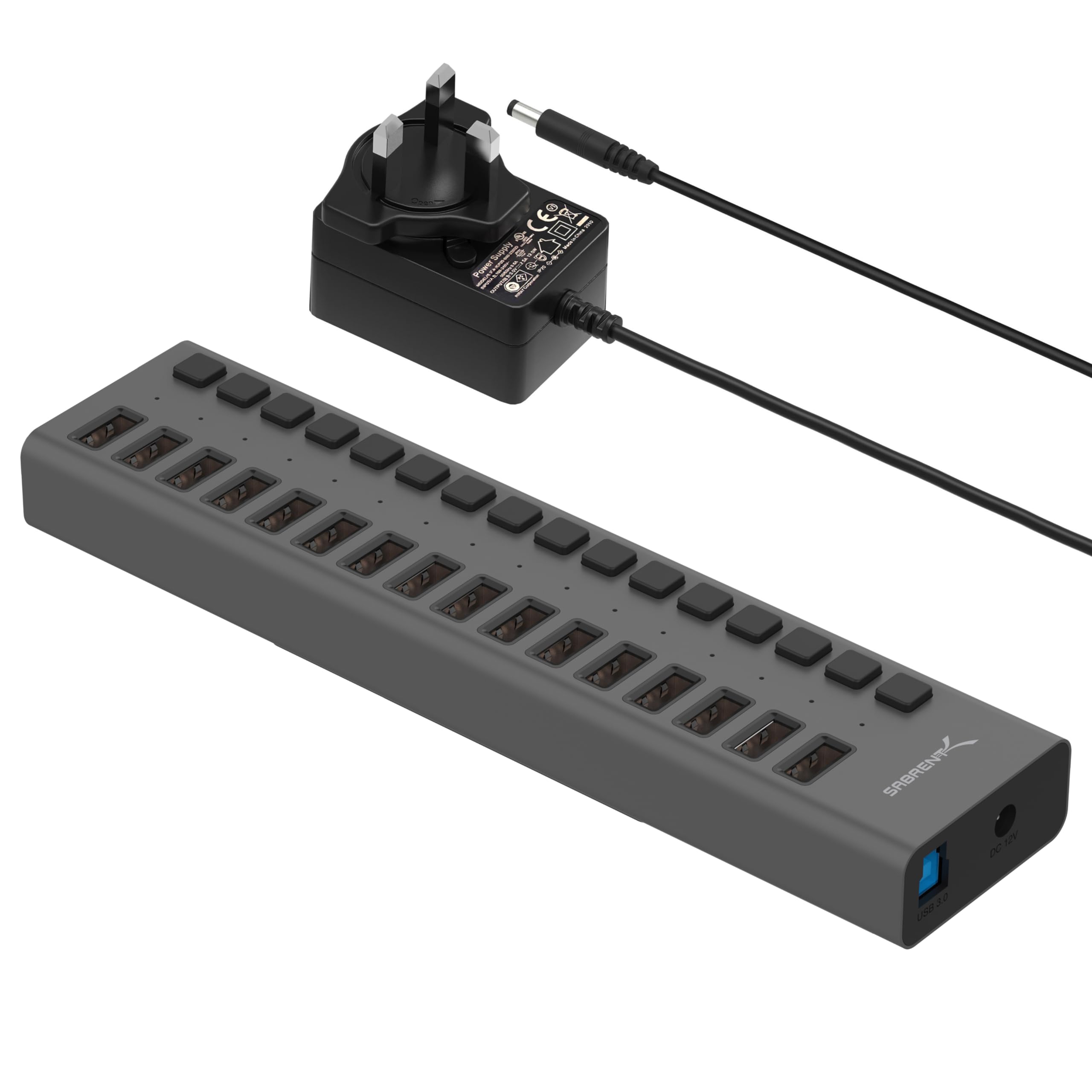
The SABRENT HB-PU16 is a powered USB-A hub for users who regularly connect a large set of drives, readers, and other peripherals.
This SABRENT HB-PU16 review looks at its 16 USB 3.0 ports, per-port switches, and the practical tradeoffs of choosing a high-capacity desktop hub.
SABRENT HB-PU16 Review Summary
The quick verdict
1,000+ ratings
Read Amazon ReviewsSABRENT HB-PU16
A strong fit for desk setups that need many USB-A connections, individual port switches, and high-speed data access in one hub.
- 16 downstream USB Type-A ports for connecting multiple compatible peripherals.
- USB 3.0 data transfer rates of up to 5Gbps.
- Backward compatibility with USB 2.0 and USB 1.1 devices.
- Individual power switches for each port, paired with blue LEDs that indicate port power status.

Pros
- A generous 16-port layout can consolidate many USB-A connections around one workstation.
- Individual switches let you control ports separately instead of treating every connected device as one group.
Consider before buying
- The 16-port format is excessive if you only need to connect a few devices.
- The described ports are USB-A, so check that your host and peripherals have compatible connections or appropriate adapters.
Read the full review summary
The HB-PU16’s defining benefit is straightforward: it provides 16 downstream USB 3.0 ports in one hub, with individual power switches and blue status LEDs.
That combination suits a workstation where several devices stay connected but do not all need to remain powered at once. Plug-and-play and hot-swappable operation also make it easier to add or remove compatible peripherals without a complicated setup.
This is a specialized choice for people with many USB-A devices, such as external drives, card readers, flash drives, and other peripherals.
The advertised data rate reaches up to 5Gbps, and the ports also support USB 2.0 and USB 1.1 devices.
Before buying, consider how many ports you truly need, whether your devices use USB-A, and whether your setup has a suitable place for a powered hub.
The buying factors
SABRENT HB-PU16 Scorecard
Editorial scores reflect listed features and buyer fit; they are not laboratory measurements or customer ratings.
Port capacity
Sixteen downstream ports provide unusually broad connection capacity for a single USB-A hub.
Port-level control
An individual power switch and blue status indicator for each port make it easier to manage a crowded connection layout.
USB generation flexibility
USB 3.0 supports data rates up to 5Gbps, while compatibility extends to USB 2.0 and USB 1.1 devices.
Peripheral range
The described uses cover drives, card readers, flash drives, and other USB peripherals for access or charging.
Setup simplicity
Plug-and-play and hot-swappable operation are useful for adding compatible devices without a driver-focused setup.
Fit for compact setups
Sixteen ports are valuable when the workload demands them, but the capacity may be more than a simple or portable setup needs.
Key Features and Specifications of SABRENT HB-PU16
- 16 downstream USB Type-A ports for connecting multiple compatible peripherals.
- USB 3.0 data transfer rates of up to 5Gbps.
- Backward compatibility with USB 2.0 and USB 1.1 devices.
- Individual power switches for each port, paired with blue LEDs that indicate port power status.
- Supports super-speed, high-speed, full-speed, and low-speed USB transmission modes.
- Designed for use with flash drives, card readers, external hard drives, and other USB peripherals for accessing or charging.
- Plug-and-play and hot-swappable operation for compatible devices.
Pros and Cons of SABRENT HB-PU16
Pros
- A generous 16-port layout can consolidate many USB-A connections around one workstation.
- Individual switches let you control ports separately instead of treating every connected device as one group.
- Blue LEDs make each port’s power status visible at a glance.
- Up to 5Gbps data transfer and backward compatibility cover a range of USB device generations.
- Plug-and-play and hot-swappable operation keep routine device changes simple.
Consider before buying
- The 16-port format is excessive if you only need to connect a few devices.
- The described ports are USB-A, so check that your host and peripherals have compatible connections or appropriate adapters.
- The up-to-5Gbps figure is a maximum data rate; actual transfers depend on the connected devices and setup.
Who Should Buy SABRENT HB-PU16?
Good fit
Consider the HB-PU16 if your desk routinely needs many USB-A connections and you want each port to have its own switch and power-status light.
The combination is particularly practical when the connected mix includes drives, card readers, flash storage, and other peripherals that you may want to manage independently.
It is also worth considering when your devices span USB 3.0, USB 2.0, and USB 1.1 generations.
The listed compatibility makes it useful as a central connection point for a mixed collection, while plug-and-play and hot-swappable support help when devices are added or removed during normal work.
Before choosing it, count the devices you expect to leave connected, confirm their connector type, and check the needs of any power-sensitive equipment.
The product description presents the ports as supporting access or charging, but does not give a per-port charging rate or explain how output is allocated across the hub.
Who should skip it
Skip this model if your routine only calls for a small number of USB ports; a 16-port hub may add unnecessary capacity to a simple setup.
Look elsewhere if your primary requirement is a different host connector or a specifically rated charging output. Confirm that the HB-PU16’s USB-A connections and power details match the devices you plan to use.
What the SABRENT HB-PU16 Means for a Crowded Desk
Sixteen ports make the most sense in a fixed workstation
The main appeal is capacity: a single hub can gather a large number of USB-A devices near the computer.
That can reduce the need to swap connections when multiple drives, readers, and accessories are part of the same routine.
The benefit depends on actually needing that many connections; buyers with only a few peripherals may find a smaller hub easier to justify.
Individual switches add practical control
Each port has a power switch and blue LED, so users can see which ports are powered and manage them separately. This is useful when devices remain plugged in but are used at different times.
The controls describe port power status and switching; they should not be taken as a guarantee about charging speed or how the hub distributes power.
USB 3.0 is backward-compatible, with a stated ceiling
The hub supports USB 3.0 data rates up to 5Gbps and remains compatible with USB 2.0 and USB 1.1 devices.
That flexibility can accommodate an older peripheral alongside newer storage, but the maximum is not a promise that every device will transfer data at that rate. The connected device and the rest of the setup affect real-world results.
Check both the connection type and power needs
This is a USB-A-focused hub, so review the ports available on the computer and the connectors on the devices you plan to attach. The description includes charging among possible uses but does not specify charging output per port.
If fast charging or a particular power level is important, verify that the documented output meets the requirement before choosing.
Alternatives to SABRENT HB-PU16
USB Hubs alternative
6,000+ ratings
Read Amazon ReviewsSABRENT HB-B7C3 10-Port USB 3.0 Hub
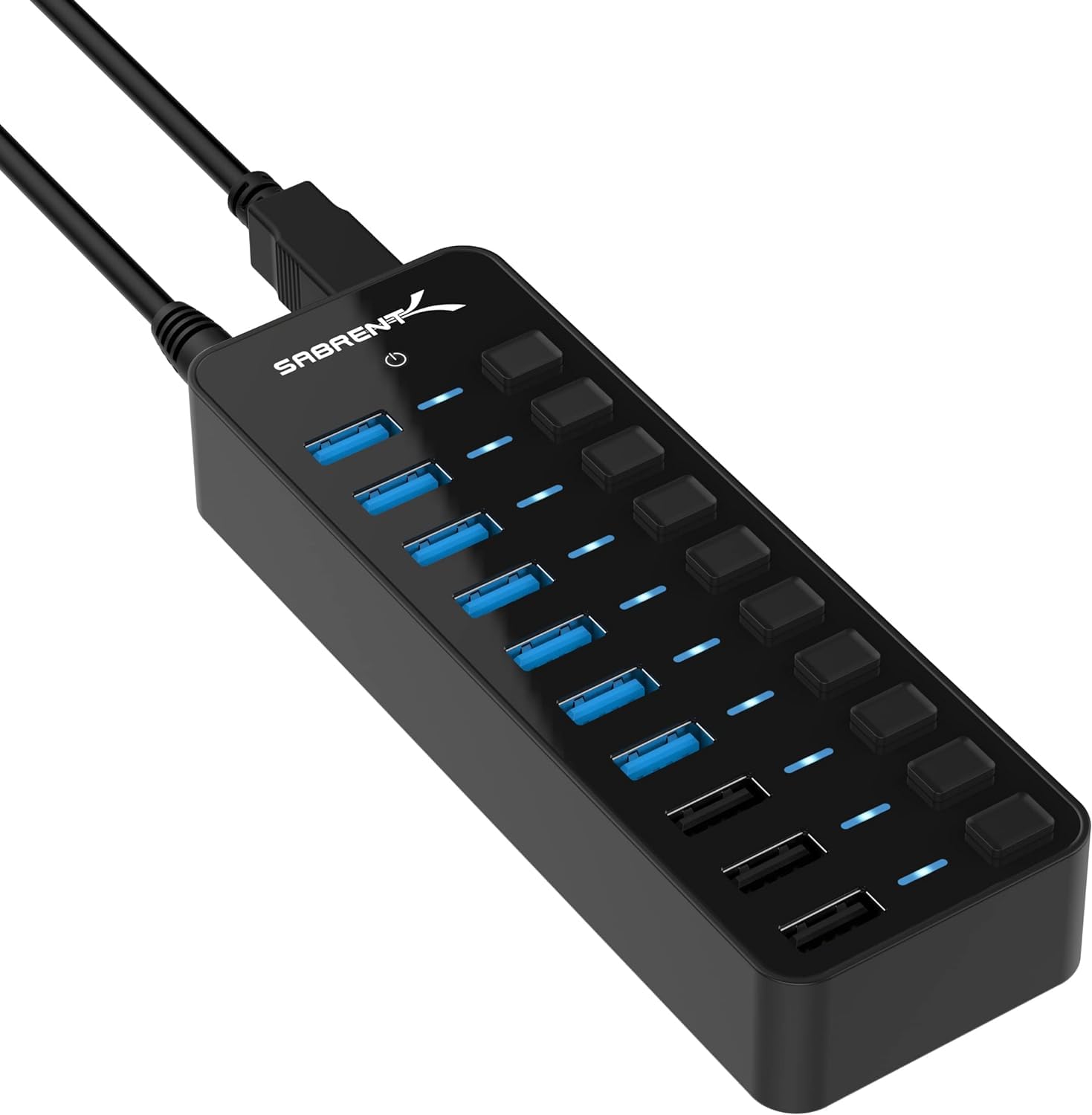
Choose the HB-PU16 when having 16 downstream ports is the priority. The HB-B7C3 is a better fit if seven device connections are enough and you specifically want dedicated charging ports with a stated per-port output.
- The HB-B7C3 connects up to seven USB 3.0 devices at once, has individual switches and LED indicators, and includes three dedicated smart-charging ports rated up to 2.4A per port.
- Its description lists a 60W power adapter.
- The HB-PU16 has 16 USB 3.0 ports, individual power switches and LEDs, and a maximum stated data rate of 5Gbps.
USB Hubs alternative
2,000+ ratings
Read Amazon ReviewsSABRENT HB-MC3B 4-Port USB 3.0 Hub
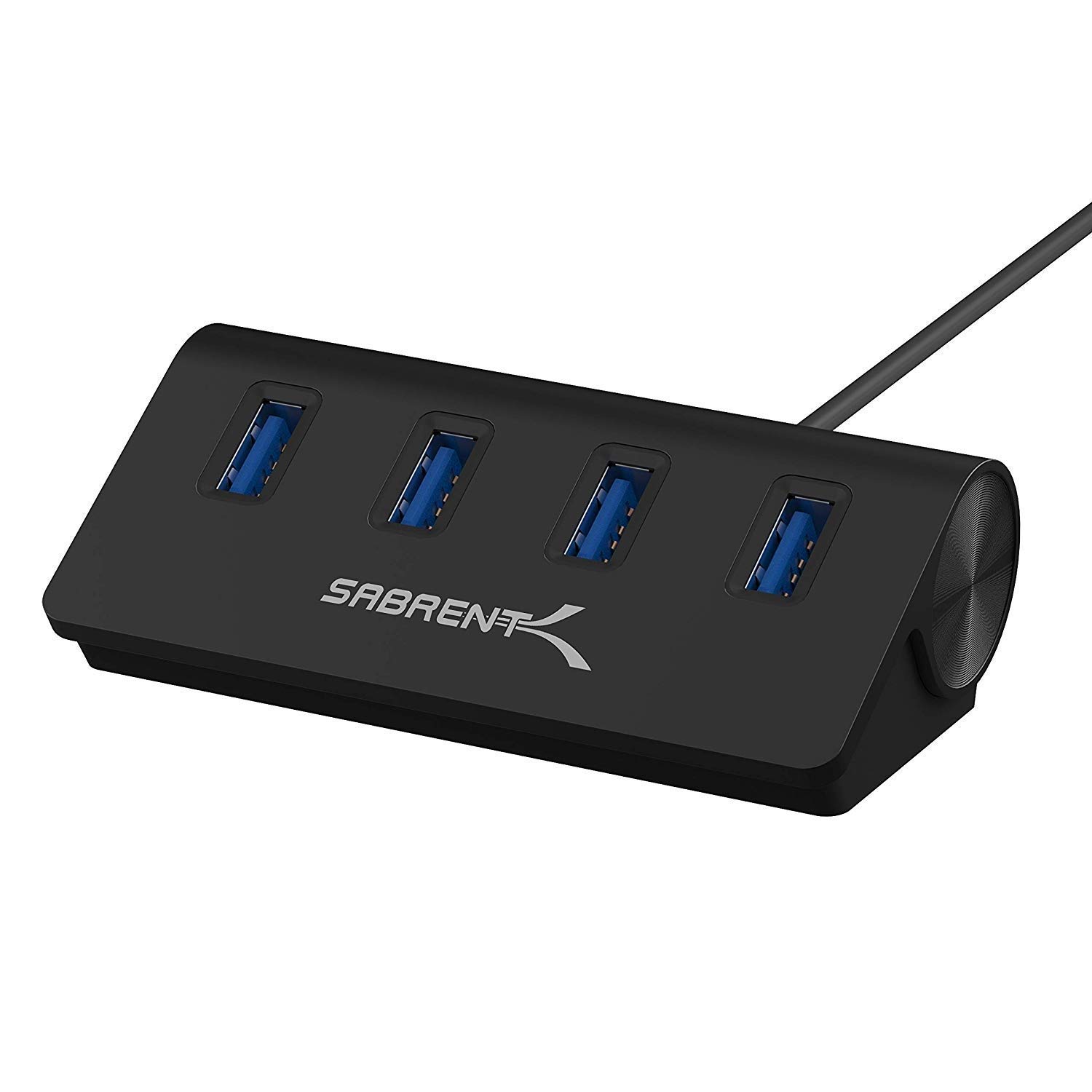
The HB-MC3B better suits a smaller setup that needs only four USB 3.0 connections and values the included cable length. Pick the HB-PU16 if consolidating many more devices and controlling individual ports matter more.
- The HB-MC3B provides four USB 3.0 ports, supports data rates up to 5Gbps, and includes a 2.5-foot USB 3.0 cable.
- Its description also lists compatibility with USB 2.0 and USB 1.1.
- The HB-PU16 emphasizes a high port count, individual power switches, and compatibility with USB 3.0, USB 2.0, and USB 1.1 devices.
Is SABRENT HB-PU16 Worth It?
The SABRENT HB-PU16 is worth considering for a busy USB-A workstation that genuinely needs a large number of connections.
Sixteen ports, individual switches, visible power indicators, and compatibility across USB 3.0, 2.0, and 1.1 make it a flexible hub for mixed peripherals.
Its appeal depends on the scale and power requirements of your setup.
Count your devices, confirm USB-A compatibility, and check any specific charging needs before buying; if you only need a handful of ports, a smaller hub may be a better fit.
Your review at a glance
1,000+ ratings
Read Amazon ReviewsSABRENT HB-PU16
A strong fit for desk setups that need many USB-A connections, individual port switches, and high-speed data access in one hub.
- 16 downstream USB Type-A ports for connecting multiple compatible peripherals.
- USB 3.0 data transfer rates of up to 5Gbps.
- Backward compatibility with USB 2.0 and USB 1.1 devices.
- Individual power switches for each port, paired with blue LEDs that indicate port power status.